Is Multiplier Legit? An Honest Look at the $400 EOR (2026)
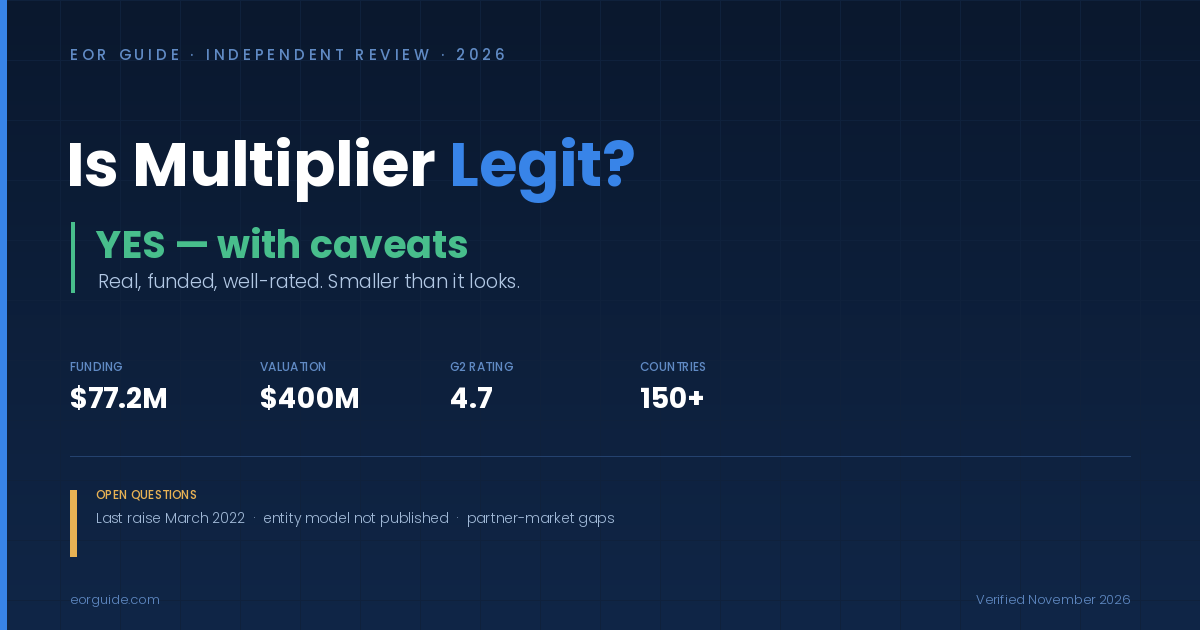
Quick Answer: Yes, Multiplier is a legitimate company. It was founded in 2020, is headquartered in Singapore, has raised $77.2 million from Tiger Global, Sequoia Capital India and DST Global, and holds strong user ratings — 4.7 on G2 across 1,374 reviews and 4.9 on Trustpilot across 2,756. It is a real Employer of Record and your employees will be paid.
The fair caveats are about size and age rather than honesty. Multiplier is far smaller than Deel, its last major funding round closed in March 2022, and it does not publish which countries run on owned entities versus local partners. None of that makes it illegitimate. All of it is worth knowing before you sign.
If you are asking is Multiplier legit because you are about to put international payroll through them, this article covers the evidence on both sides.
Is Multiplier Legit as a Company? The Evidence
Founded and based. Multiplier launched in 2020 and is headquartered in Singapore, led by CEO Sagar Khatri.
Funding. The company has raised $77.2 million in total: a $13.2 million Series A in October 2021, followed by a $60 million Series B in March 2022 led by Tiger Global and Sequoia Capital India, with DST Global Partners participating. That round valued the company at approximately $400 million.
Investor quality matters here. Tiger Global and Sequoia conduct substantial diligence before writing cheques of that size. Their involvement is not a guarantee of anything, but it does mean the company’s financials, legal structure and compliance processes were examined by people with strong incentives to find problems.
User ratings. Multiplier holds 4.7 on G2 across 1,374 reviews and 4.9 on Trustpilot across 2,756 reviews. Review volume at that scale is difficult to fake and difficult to sustain if a provider is routinely failing at payroll.
Industry recognition. Multiplier was named a Leader in NelsonHall’s NEAT evaluation for Global EOR Services in September 2025 — notable for a provider at its price point.
Coverage and scale. 150+ countries, with reporting suggesting more than 100 owned legal entities.
On the narrow question of is Multiplier legit as a business, the evidence is clear. This is a funded, rated, recognised company with real infrastructure.
The Funding Question Nobody Raises
Here is the fact most Multiplier reviews leave out: the Series B closed in March 2022. At the time of writing that is roughly four and a half years ago, and no Series C has been publicly reported.
Three readings are possible, and we cannot tell you which is correct:
- The company reached profitability and does not need to raise
- It raised privately without announcing
- It has struggled to raise in a tighter funding market
For comparison, Deel raised a $300 million Series E in October 2025 at a $17.3 billion valuation and reports being profitable for over three years. Multiplier’s $400 million valuation is roughly 1/43rd of that.
Why this matters to you: an EOR holds your payroll funds in transit. A provider that runs out of money is a materially different risk from one that provides slow support. We have no evidence Multiplier is in difficulty — the company appears to be operating normally and growing. But if you are placing significant payroll volume with them, asking about financial position during procurement is reasonable, and a healthy company will answer.
Here is the fact most answers to is Multiplier legit leave out: the Series B closed in March 2022.
What Users Actually Complain About
Strong ratings do not mean no complaints. The recurring themes in Multiplier user reviews are specific and consistent:
Partner coordination gaps. The most substantive criticism. Offboarding, insurance claims and post-departure questions can bounce between Multiplier and its local partner, with neither side owning the answer. This is the direct consequence of the mixed entity model.
Undisclosed fees. Several users report charges not flagged upfront, including high management fees in Singapore. Multiplier markets a flat $400 rate; roughly 11% of markets carry adjusted pricing.
Invoice accuracy. Line items that do not match internal pay structures, and invoices requiring regeneration.
Slow country-specific payroll support. Complex local tax questions can take longer to resolve and sometimes require escalation to a partner.
Immigration timelines. Straightforward visa cases go well; one reviewer described the mobility team as “the weakest link” on complex cases.
Cost at low headcount. $400 per employee per month feels steep for a company making one or two hires.
The pattern is worth naming: Multiplier performs well on standard cases and strains on complex, country-specific or high-volume ones. That is a normal profile for a company at this stage, and it is the honest answer to is Multiplier legit for your specific situation.
The Entity Transparency Problem
This is our main reservation, and it is not about legitimacy — it is about disclosure.
Multiplier operates a mixed model: owned entities in core markets, local partners elsewhere. It does not publish which countries fall into which category. Users consistently report having to ask an account manager directly.
The difference is real. With an owned entity, Multiplier is your employee’s legal employer and carries liability directly. With a partner, a third-party firm holds that relationship, and your service quality, onboarding speed and dispute resolution all depend on them. Users report onboarding in under 24 hours in owned markets versus 7–10 days in partner markets like Brazil.
Ask before you sign: which countries on your hiring list does Multiplier own the entity in? Get it in writing. If the answer is owned, you are getting premium infrastructure at a mid-market price. If it is partner, you are buying something closer to the $199 tier and should price accordingly.
Every partner-model provider has this structure. Multiplier is unusual only in not publishing the breakdown.
This is our main reservation when people ask is Multiplier legit — and it is not about legitimacy, it is about disclosure.
Is Multiplier Legit Compared to the Alternatives?
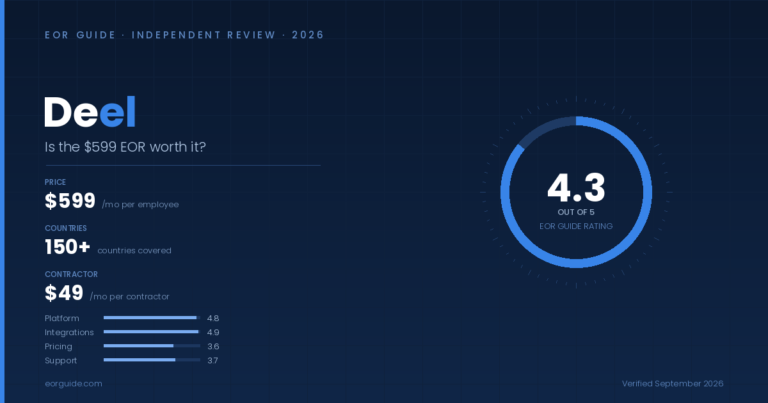
Against Deel. Deel is vastly larger — $17.3 billion valuation, 40,000 customers, profitable three years. But Deel is also in active litigation with Rippling over corporate espionage allegations, with a federal criminal investigation reported in January 2026. Multiplier has no comparable controversy. Size and clean record are different things. See Is Deel Legit?
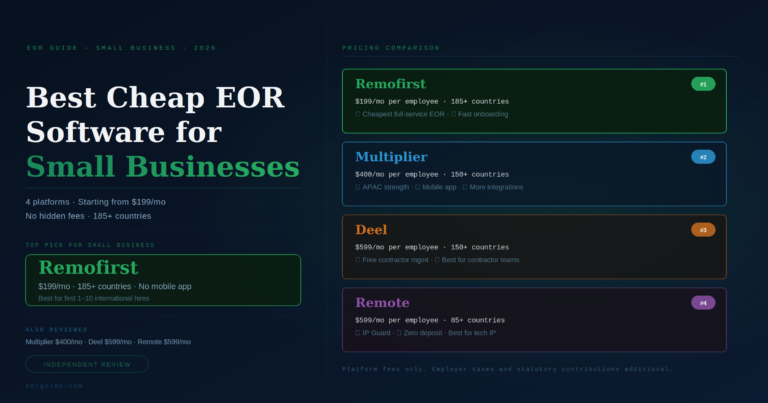
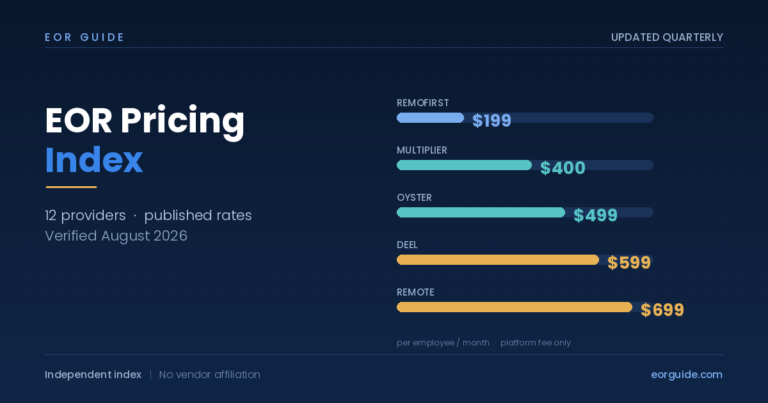
Against Remote. Remote owns entities in every market it serves with no ambiguity, at $699 monthly. If entity certainty is your concern, that is the provider to compare against.
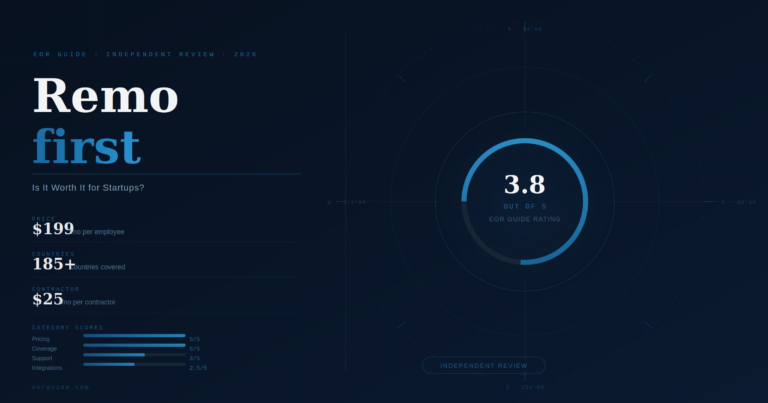
Against Remofirst. Remofirst is younger and cheaper at $199, with a full partner network. Multiplier is the more established of the two.
Is Multiplier Legit: FAQ
Is Multiplier a scam?
No. Multiplier is a Singapore-headquartered company backed by Tiger Global and Sequoia Capital India, with over 4,000 combined user reviews averaging above 4.5 across major platforms.
Is Multiplier financially stable?
There is no public evidence of difficulty, and the company appears to be operating and growing normally. The honest caveat is that its last announced raise was March 2022 and current financials are not public. Ask during procurement if you are placing significant volume.
Is my money safe with Multiplier?
Reviews consistently report on-time payments with accurate statutory deductions, which is where cheaper providers most often fail. Standard vendor diligence still applies, as with any provider handling payroll.
Is Multiplier compliant?
Yes. Multiplier generates locally compliant contracts and manages statutory obligations across its coverage. In partner-entity markets, execution depends on the local partner — the same structural point that applies to any mixed-model provider.
Should I choose Multiplier over Deel?
For Asia-Pacific hiring under roughly fifteen employees with a simple HR stack, Multiplier is usually better value. For integration-heavy operations or European hiring, Deel’s platform advantages typically justify the higher fee.
The Bottom Line
Is Multiplier legit? Yes. The company is real, funded by serious investors, well-rated by thousands of users, and recognised by independent industry analysts. The question of whether your employees will be paid correctly is not in doubt.
The useful questions are narrower. Is Multiplier legit for a company hiring into a partner-entity market with complex local requirements? Possibly not the best fit — that is where the complaints concentrate. Is Multiplier legit for a startup making five hires across Singapore, India and the Philippines? That is close to its ideal case.
Two things to do before signing: ask which countries run on owned entities, and ask for the FX spread and any country surcharge in writing. A provider that answers both openly tells you something useful.
For the full assessment of pricing, platform and support, read our Multiplier review. For current published rates across twelve providers, see our EOR Pricing Index. Our review methodology explains how we assess every provider.
EOR Guide Editorial Team. Company and funding information verified November 2026 against public reporting and investor announcements. User ratings reflect figures reported at time of writing and change continuously. Vendor terms change frequently — confirm current rates directly before purchasing. EOR Guide may earn a commission from providers featured on this page. This does not influence our assessments.