Deel vs Remote: Which EOR is Better for Startups in 2026?
Deel vs Remote is one of the most common comparisons US startups make when evaluating EOR software in 2026.
Quick Answer:
Deel works better for startups that need to move fast and operate in many countries. Over 150 countries.
Remote is a choice for tech startups that worry about protecting their ideas because it lets them own their entities directly.
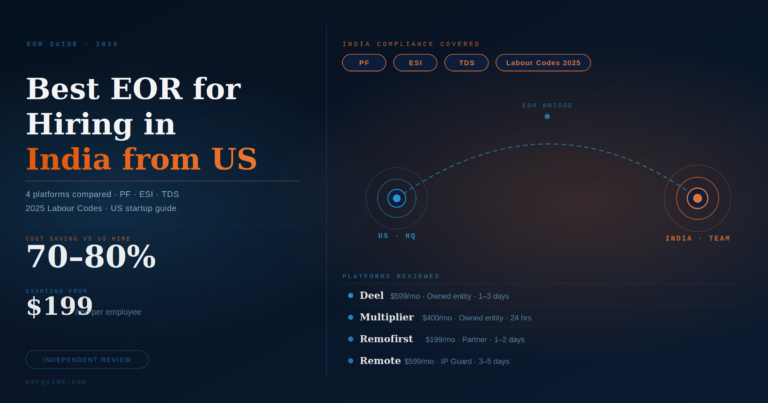
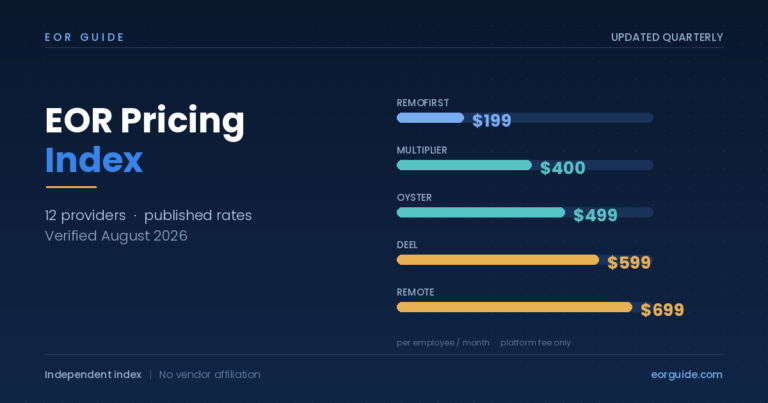
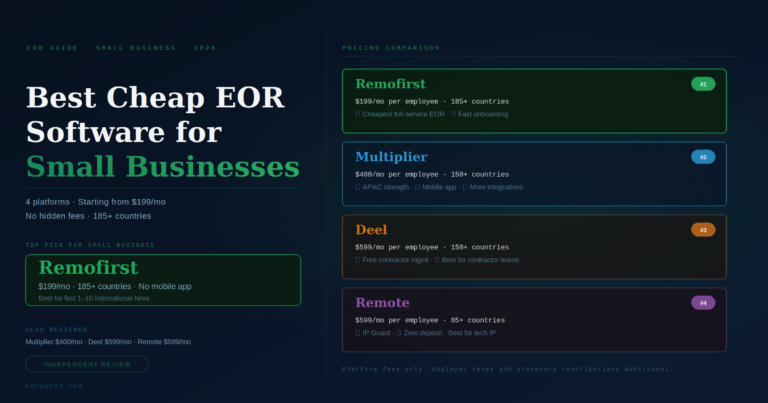
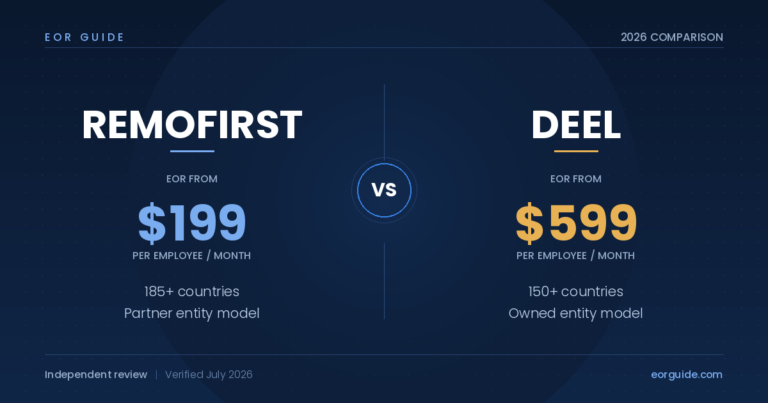
Both Deel and Remote cost $599 per employee per month — so the real decision comes down to country coverage, compliance model, support, and ease of use, not price.
This Deel vs Remote guide compares both platforms on pricing, country coverage, compliance, support, and ease of use to help you decide which is right for your startup.
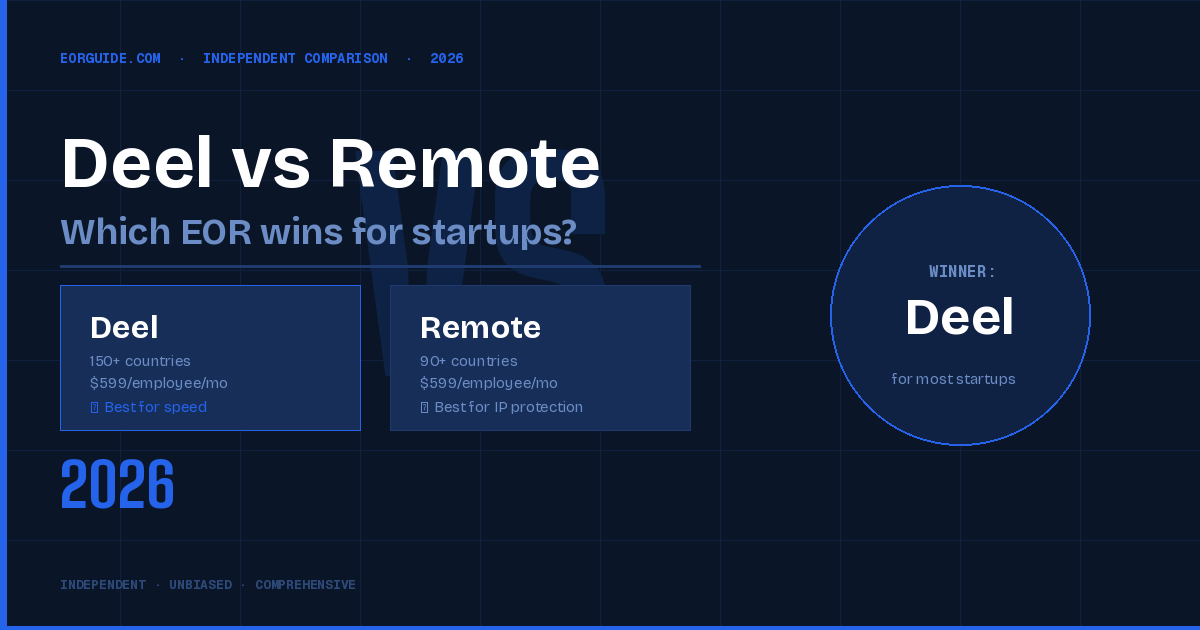
Deel vs Remote: Quick Comparison
* Deel
- Deel
- Price: $599 per employee per month
- Countries: 150+
- Entity model: mix of owned and third-party entities
- Best for: fast hiring, contractor management, broad tool integrations
* Remote
- Price: $599 per employee per month
- Countries: 90+, all through entities it owns directly
- Entity model: 100% owned entities
- Best for: IP protection, compliance-first tech startups
Verdict:
Deel and Remote cost the same but excel in different areas. Choose Deel if you need to hire fast across many countries. Choose Remote if protecting your IP and compliance depth matter more than speed or coverage
Deel: The Good And Bad And Who It Is Best For
Deel is the market leader in EOR software, with more than 35,000 customers and over $1 billion in annual revenue. It processes more than $22 billion in payroll each year across 150+ countries.
The good things about Deel are:
- Fast onboarding — employees can start working in 3-5 days
- Strong contractor management tools
- Integrates well with Rippling, Greenhouse, Workday, Slack, and Jira
- Dedicated compliance teams ensuring accuracy in every country
- Polished mobile app
- Broadest country coverage in the market — 150+ countries
The bad things about Deel are:
- Relies on third-party partner entities in some countries, which makes compliance slightly less airtight than Remote’s owned-entity model
- Can feel complex for very small teams
- Premium pricing with no lower-cost tier
Deel is best for startups that need to hire fast across many countries, manage a large contractor base, or want HR software that integrates well with their existing tools.
Deel is not the right choice for tech companies with sensitive IP concerns, or for companies hiring in just one or two countries — where Remofirst may offer better value.
Remote: The Good And Bad And Who It Is Best For
Remote owns its legal entities directly in every country it operates in — it doesn’t rely on third-party partners. This makes it the strongest choice for compliance certainty and data security.
The good things about Remote are:
- It owns its companies. This means it is the best at following the rules
- It is the best at keeping secret information safe
- It is clear about how much it costs. There are no hidden fees
- It is good for employees and gives them good benefits
- It is great for tech companies that hire engineers from other countries
- It follows the rules for GDPR and SOC2
The bad things about Remote are:
- Narrower country coverage than Deel — 90+ countries versus 150+
- Same price as Deel despite covering fewer countries
- Onboarding takes longer in some markets compared to Deel
- Fewer third-party integrations than Deel
Remote is best for tech companies with sensitive IP, businesses hiring engineers internationally, and companies that prioritize compliance certainty over speed or country breadth.
Remote is not the right choice for companies that need to hire across many countries quickly, or that need strong contractor management tools.
Deel vs Remote: A Head to Head Comparison
Both Deel and Remote charge $599 per employee per month for their EOR services — a tie on core pricing. Deel offers contractor management at $49/month, while Remote has a free basic plan for simple contractor needs. Remote wins on contractor management value since its free tier covers more use cases.
Lets talk about the countries they cover.
Country coverage:
- Deel covers 150+ countries
- Remote covers 90+ countries, all through entities it owns directly
Deel wins on country coverage. Remote wins on compliance depth in the countries it does cover, since every market runs through an owned entity rather than a third-party partner.
Compliance and IP protection:
- Deel uses a mix of owned and third-party entities depending on the country
- Remote owns 100% of its entities directly, removing third-party risk entirely
Remote wins on IP protection and compliance strength.
Onboarding speed:
- Deel: 3-5 business days
- Remote: 5-7 business days
Deel wins on onboarding speed.
Integrations:
- Deel integrates with 100+ tools, including Rippling, Greenhouse, Workday, Slack, Jira, and QuickBooks
- Remote offers fewer integrations overall but is particularly strong on HRIS connections
Deel wins on integrations.
Customer support:
- Both offer dedicated account managers on paid plans
- Deel provides 24/7 support across more time zones
- Remote’s support is widely praised for quality, though response times can be slower
Deel wins on support availability. Remote wins on support quality.
Frequently Asked Questions
Q1. If you want to hire someone in India, which one’s better, Deel or Remote?
Both Deel and Remote cover India well. Deel is faster for onboarding, while Remote’s owned-entity model offers stronger IP protection for tech companies hiring engineers in India.
Q2. Which one is cheaper Deel or Remote?
Both charge $599 per employee per month for EOR services. For contractor management, Remote offers a free basic plan, while Deel charges $49/month for its contractor tier.
Q3. Can you switch from Deel to Remote?
Yes. Most EOR contracts are monthly, and you typically need to give 30-60 days’ notice. Switching is straightforward, though you will need to re-onboard your employees on the new platform.
Q4. Deel vs Remote: which has better compliance?
Remote wins on compliance because it owns its entities directly in every country. Deel uses third-party partners in some markets, which introduces some compliance risk.
Our Verdict: Deel vs Remote
Choose Deel if you need to hire quickly across many countries, manage a mix of employees and contractors, or want strong integrations with your existing HR stack.
Choose Remote if you’re a tech startup with IP concerns hiring engineers internationally, or if you prioritize compliance depth over speed and coverage.
For early-stage startups, Deel is the practical choice. For Series A+ tech companies building distributed engineering teams, Remote’s compliance model is worth the tradeoff on country coverage.
Our Deel vs Remote comparison shows Deel wins for most startups on speed and coverage, while Remote wins on compliance and IP protection.
Last updated: June 2026
We earn commissions when you sign up through our links at no cost, to you.